If you’re planning to buy a home with a loan, one number you should understand before signing anything is your Home Loan EMI.
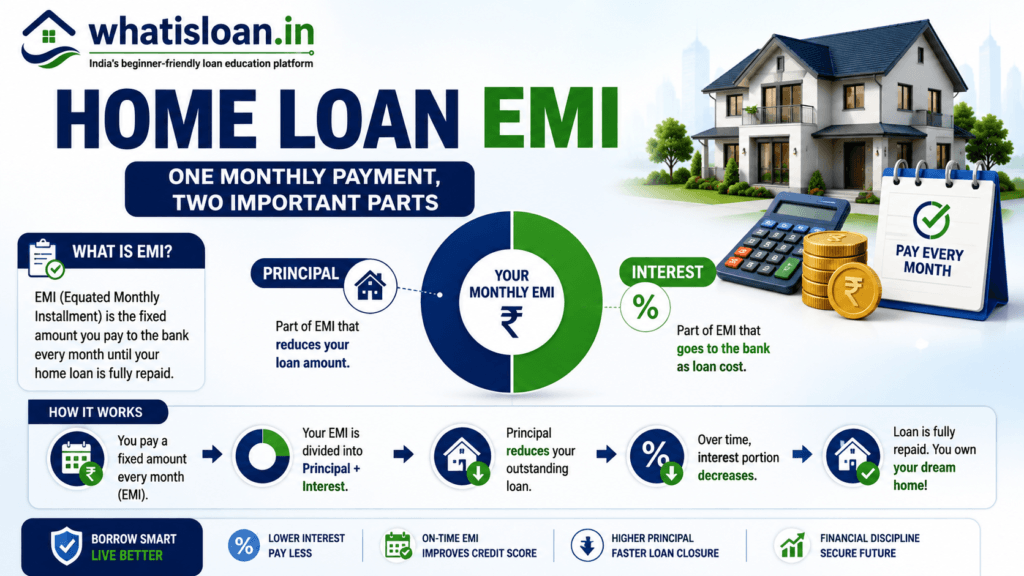
EMI stands for Equated Monthly Instalment. It is the amount you repay to your lender every month until your home loan is fully paid. But your EMI is not simply the loan amount divided by the number of months. It includes both principal and interest.
For example, a ₹50 lakh home loan can have a very different EMI depending on the interest rate and repayment tenure you choose.
In this guide, you’ll learn how Home Loan EMI works, how lenders calculate it, how ₹20 lakh, ₹30 lakh and ₹50 lakh loans compare, and what you can do to reduce your monthly payment and total interest cost.
What Is Home Loan EMI?
EMI means Equated Monthly Instalment.
It is the regular payment you make to your lender every month toward your home loan.
Your EMI generally contains two parts:
- Principal: The original amount you borrowed.
- Interest: The cost charged by the lender for providing the loan.
At the beginning of a typical loan, a larger portion of the EMI goes toward interest. As you continue making payments, the principal component generally becomes larger.
This is why simply looking at the EMI isn’t enough. You should also look at the total amount you’ll repay over the entire loan tenure.
₹20 Lakh Home Loan EMI Example
Let’s take a simple example.
Suppose you borrow:
- Loan amount: ₹20 lakh
- Interest rate: 8.5% per year
- Tenure: 20 years
Your approximate EMI would be around ₹17,356 per month.
Over 20 years, the total repayment would be approximately ₹41.65 lakh, meaning the interest component would be around ₹21.65 lakh.
| Particular | Approximate Amount |
|---|---|
| Loan Amount | ₹20 lakh |
| Interest Rate | 8.5% |
| Tenure | 20 years |
| Monthly EMI | ₹17,356 |
| Total Repayment | ₹41.65 lakh |
| Total Interest | ₹21.65 lakh |
This example shows why you shouldn’t look only at the monthly EMI.
₹30 Lakh Home Loan EMI Example
Now suppose your loan amount increases to ₹30 lakh, while the interest rate and tenure remain the same.
At 8.5% for 20 years, the approximate EMI would be ₹26,035 per month.
| Particular | Approximate Amount |
|---|---|
| Loan Amount | ₹30 lakh |
| Interest Rate | 8.5% |
| Tenure | 20 years |
| Monthly EMI | ₹26,035 |
| Total Repayment | ₹62.48 lakh |
| Total Interest | ₹32.48 lakh |
Notice what happened.
Increasing the loan from ₹20 lakh to ₹30 lakh increased the EMI, but it also increased the total interest substantially.
₹50 Lakh Home Loan EMI Example
Now consider a larger home loan.
Suppose you borrow:
- ₹50 lakh
- 8.5% interest
- 20-year tenure
The approximate EMI would be ₹43,391 per month.
| Particular | Approximate Amount |
|---|---|
| Loan Amount | ₹50 lakh |
| Interest Rate | 8.5% |
| Tenure | 20 years |
| Monthly EMI | ₹43,391 |
| Total Repayment | ₹1.04 crore |
| Total Interest | ₹54.14 lakh |
This example highlights an important point:
A ₹50 lakh loan does not cost only ₹50 lakh.
At the assumed rate and tenure, the interest alone can be more than ₹54 lakh.
Actual EMI and total interest will vary based on the lender’s rate, loan structure and repayment terms.
Home Loan EMI Comparison
Here’s a quick comparison using the same 8.5% interest rate and 20-year tenure:
| Loan Amount | Approx. EMI | Approx. Total Interest |
|---|---|---|
| ₹20 lakh | ₹17,356 | ₹21.65 lakh |
| ₹30 lakh | ₹26,035 | ₹32.48 lakh |
| ₹50 lakh | ₹43,391 | ₹54.14 lakh |
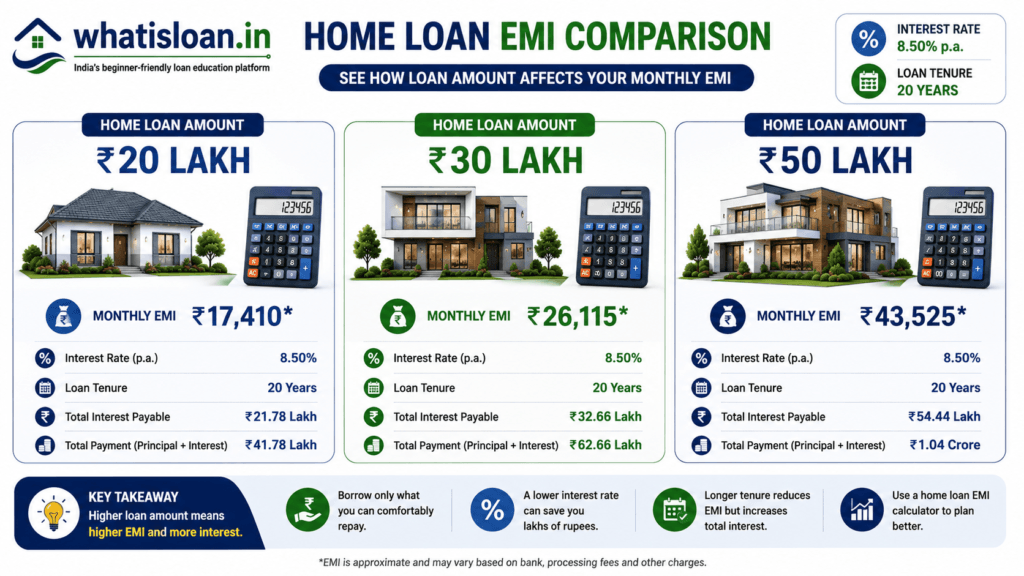
These numbers make one thing clear:
Borrowing more means paying more interest.
Before taking the maximum loan a lender offers, ask yourself whether you actually need that amount.
How Interest Rate Affects Home Loan EMI
The interest rate has a direct effect on your EMI.
Suppose you borrow ₹30 lakh for 20 years.
If the interest rate increases, your EMI generally increases as well.
For example:
| Interest Rate | Approx. EMI |
|---|---|
| 7.5% | ₹24,168 |
| 8.5% | ₹26,035 |
| 9.5% | ₹27,964 |
Even a 1% difference can add thousands of rupees to your monthly payment.
Over a long repayment period, the difference in total interest can become significant.
This is why you should compare lenders rather than choosing a loan based only on the advertised rate.
You can also read our guide on Fixed vs Floating Interest Rates to understand how changing rates can affect your loan.
How Loan Tenure Affects Home Loan EMI
Loan tenure means the amount of time you have to repay your loan.
Common home loan tenures include:
- 10 years
- 15 years
- 20 years
- 25 years
- 30 years
A longer tenure usually means a lower monthly EMI.
But there is a catch.
You may pay more total interest because the loan remains outstanding for a longer period.
Why a Longer Tenure Can Cost More
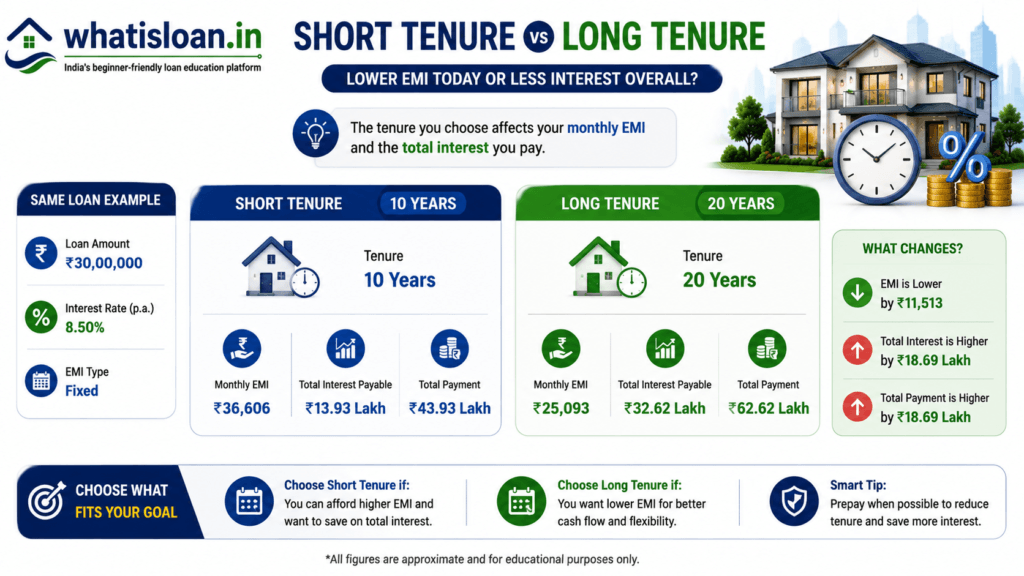
Consider a ₹30 lakh loan at 8.5%.
15-Year Tenure
Your EMI will be higher, but you’ll repay the loan sooner and pay less total interest.
20-Year Tenure
The EMI becomes more manageable, but total interest increases.
30-Year Tenure
The EMI falls further, but the total interest can become much higher.
So don’t choose a longer tenure simply because the EMI looks attractive.
Instead, find a balance between monthly affordability and total borrowing cost.
How to Reduce Your Home Loan EMI
If your EMI feels too high, you have several options.
Increase Your Down Payment
A larger down payment means you borrow less.
For example, instead of borrowing ₹50 lakh, increasing your upfront contribution could reduce the loan to ₹40 lakh.
A smaller loan generally means a lower EMI and lower total interest.
Calculator on How to reduce your home loan smartly.
Choose a Longer Tenure
Extending the tenure can reduce your monthly EMI.
However, remember that you’ll probably pay more interest overall.
Use this option carefully.
Compare Interest Rates
Even a small rate difference can affect your EMI.
Compare multiple lenders before making a decision.
You can explore our guide to the Best Banks for Home Loans in India.
How to Reduce Total Home Loan Interest
Reducing EMI isn’t always the same as reducing total interest.
If your goal is to save money over the long term, consider these strategies.
Make a Larger Down Payment
Borrow less from the beginning.
Choose a Shorter Tenure
You’ll usually pay less interest because the loan is repaid faster.
Increase EMI When Income Rises
If your salary increases, consider increasing your EMI instead of increasing lifestyle expenses immediately.
Make Part-Prepayments
Use suitable surplus funds, such as a bonus, to reduce your outstanding principal, subject to your loan terms.

Home Loan Prepayment vs Higher EMI
Both strategies can help you repay your loan faster.
| Strategy | Main Benefit |
|---|---|
| Higher EMI | Repays principal faster every month |
| Part-Prepayment | Makes a large one-time reduction in principal |
| Shorter Tenure | Reduces the period over which interest accumulates |
Which one is better depends on your income, savings, emergency fund and other financial goals.
Don’t use all your savings for prepayment if it leaves you without an emergency fund.
How Much Home Loan EMI Can You Afford?
Getting approved for an EMI doesn’t mean you should take it.
Suppose your monthly income is ₹60,000.
An EMI of ₹35,000 may technically be possible in some situations, but it could leave you with limited money for:
- Food
- Rent
- Education
- Medical expenses
- Insurance
- Investments
- Emergency savings
Your home loan should fit into your overall household budget.
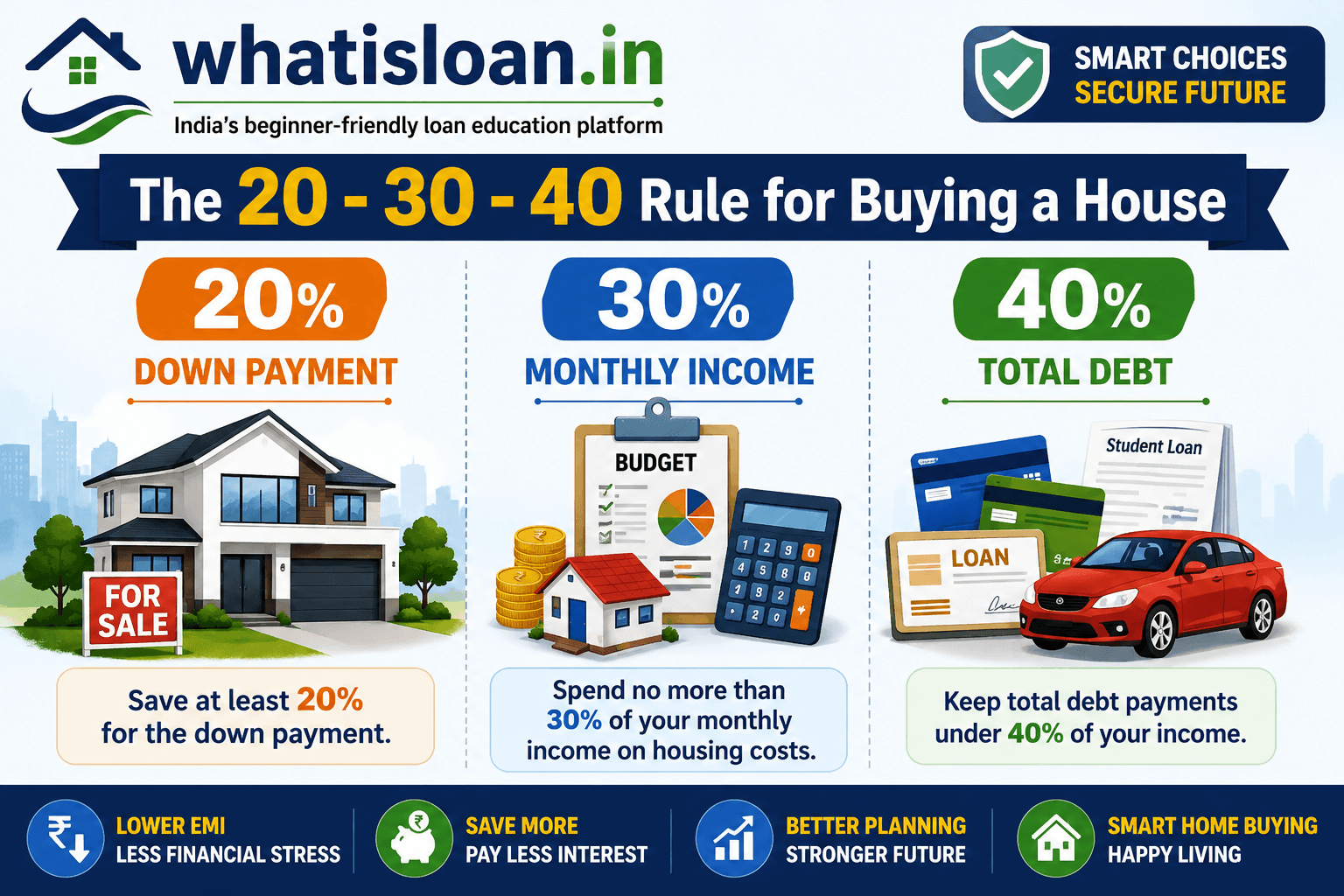
Our 3/20/30/40 Rule for Home Loans can also help you think about affordability before committing to a long-term loan.
Key Takeaways
- Home Loan EMI consists mainly of principal and interest.
- Your EMI depends on the loan amount, interest rate and tenure.
- A larger loan generally means a larger EMI and more total interest.
- A longer tenure lowers the monthly EMI but can increase total interest.
- A larger down payment can reduce your borrowing cost.
- Prepayment and higher EMI can help you repay your loan faster.
- Always calculate affordability before accepting the maximum loan offered by a lender.
- Use a Home Loan Calculator to compare different loan scenarios.
Conclusion
Understanding Home Loan EMI before borrowing can save you from an expensive mistake.
Don’t look only at whether you can pay this month’s EMI. Look at the total amount you’ll repay, the interest you’ll pay over the years, and whether the loan still fits your budget if your expenses increase.
For example, our ₹20 lakh, ₹30 lakh and ₹50 lakh illustrations show how quickly the total interest can grow when you borrow more or choose a longer repayment period.
The best home loan isn’t necessarily the one with the lowest EMI. It’s the one that gives you a manageable monthly payment without creating unnecessary long-term financial pressure.
Before applying, calculate different scenarios, compare lenders, understand the interest rate, and keep enough money aside for emergencies.
FAQs About Home Loan EMI
What is Home Loan EMI?
Home Loan EMI is the fixed periodic payment you make toward your home loan. It includes both principal and interest.
Is a lower EMI always better?
No. A lower EMI may come from a longer tenure, which can result in significantly higher total interest.
How can I reduce my home loan EMI?
You can consider a larger down payment, a lower interest rate or a longer tenure. However, each option has different financial consequences.
Is it better to reduce EMI or loan tenure?
If you can comfortably afford a higher EMI, reducing the tenure can help lower total interest. If monthly cash flow is tight, a lower EMI may be more practical.
Can I make home loan prepayments?
Many home loans allow part-prepayment, subject to the loan terms and applicable rules. Check your lender’s current policy before making a payment.
Should I use all my savings to repay my home loan?
Usually, you should not empty your savings. Keep an adequate emergency fund before using surplus money for loan prepayment.
**Disclaimer:** The information provided on WhatIsLoan.in is for educational and informational purposes only. We do not provide financial, legal, tax, investment, or loan approval services. Loan eligibility, interest rates, terms, and policies may vary by lender and can change over time. Readers should verify information with banks, NBFCs, government authorities, or qualified financial advisors before making any financial decisions. WhatIsLoan.in is not responsible for any losses or decisions made based on the information published on this website.