Starting or growing a business often requires money. Whether you want to buy new equipment, increase inventory, hire employees, or expand your operations, additional funds can help your business grow faster.
This is where a business loan can help.
A business loan provides financial support to business owners who need funds for business-related expenses. Banks, NBFCs, and financial institutions offer different types of business loans based on the needs of the borrower.
In this guide, you will learn what a business loan is, how it works, its types, eligibility requirements, benefits, risks, and important tips before applying.
What Is a Business Loan?
A business loan is money borrowed from a bank, NBFC, or financial institution to meet business-related expenses.
Unlike personal loans, business loans are specifically designed for business purposes.
A business owner can use the loan amount for:
- Business expansion
- Buying machinery
- Purchasing inventory
- Managing working capital
- Opening a new branch
- Hiring employees
- Marketing and advertising
Simple Example
Suppose you own a small clothing store and want to open another outlet. You may need ₹10 lakh to cover setup costs, inventory, and staff salaries. Instead of using your personal savings, you can apply for a business loan.
The lender provides the funds, and you repay the amount through monthly EMIs over a fixed period.
If you’re new to borrowing, first understand What Is a Personal Loan and How Does It Work?
How Does a Business Loan Work?
Understanding how a business loan works is important before applying.
Step 1: Apply for a Business Loan
You submit an application with the lender.
Step 2: Submit Required Documents
The lender verifies your business and financial documents.
Step 3: Credit Assessment
The lender checks:
- Business performance
- Credit score
- Revenue
- Existing liabilities
Step 4: Loan Approval
If approved, the lender sanctions the loan amount.
Step 5: Loan Disbursement
The funds are transferred to your bank account.
Step 6: EMI Repayment
You repay the loan through monthly installments consisting of:
- Principal amount
- Interest amount
Before applying, check your credit profile with this guide on What Is CIBIL Score? Complete Beginner’s Guide

Why Businesses Need a Business Loan
Many businesses use loans to achieve growth without disturbing daily operations.
Common Uses of Business Loans
Business Expansion
Open new branches or enter new markets.
Working Capital Management
Manage day-to-day expenses and cash flow.
Purchase Equipment
Buy machinery, vehicles, or technology.
Inventory Purchase
Stock products before peak business seasons.
Marketing and Advertising
Promote products and services to attract customers.
Hiring Employees
Expand your workforce to support business growth.
Types of Business Loans in India
Different businesses have different financial needs.
Term Loan
A fixed amount borrowed and repaid through EMIs.
Best For:
- Expansion
- Equipment purchase
- Long-term projects
Working Capital Loan
Used to manage everyday business expenses.
Best For:
- Salaries
- Rent
- Inventory
- Utility bills
MSME Loan
Special loans designed for Micro, Small, and Medium Enterprises.
Best For:
- Small businesses
- Manufacturing units
- Service providers
Startup Business Loan
Designed for entrepreneurs starting a new business.
Best For:
- New businesses
- Startup funding
Equipment Financing
Used to purchase machinery and equipment.
Best For:
- Manufacturing businesses
- Construction companies
Business Line of Credit
A flexible borrowing facility where you withdraw funds when needed.
Best For:
- Cash flow management
Invoice Financing
A loan against unpaid customer invoices.
Best For:
- Businesses with delayed payments
Reserve Bank of India (RBI)
Ministry of MSME
SIDBI (Small Industries Development Bank of India)
Comparison Table: Types of Business Loans in India
| Loan Type | Best For | Repayment |
|---|---|---|
| Term Loan | Expansion | Fixed EMI |
| Working Capital Loan | Daily expenses | Flexible |
| MSME Loan | Small businesses | EMI |
| Startup Loan | New businesses | EMI |
| Equipment Loan | Machinery purchase | EMI |
| Line of Credit | Cash flow | Flexible |
| Invoice Financing | Unpaid invoices | Short-term |
Features of a Business Loan
Most business loans offer:
- Loan amounts based on business needs
- Flexible repayment tenure
- Competitive interest rates
- Online application process
- Secured and unsecured options
- Quick approval for eligible borrowers
Business Loan Eligibility Criteria
The exact eligibility criteria vary by lender.
Age Requirement
Generally between 21 and 65 years.
Business Vintage
Many lenders require a business to be operational for at least 1 to 3 years.
Minimum Turnover
Businesses must meet minimum annual turnover requirements.
Credit Score
A good credit score improves approval chances.
Profitability
Lenders evaluate business income and profitability.
Documents Required for a Business Loan
Identity Proof
- PAN Card
- Aadhaar Card
- Passport
- Driving License
Address Proof
- Utility bill
- Rental agreement
- Aadhaar Card
Business Proof
- GST Registration
- Trade License
- Business Registration Certificate
Financial Documents
- Bank statements
- Income Tax Returns
- Profit and Loss Statements
- Balance Sheets
Business Loan Interest Rates and Charges
Business loan costs include more than just interest.
Interest Rate
Depends on:
- Credit profile
- Business performance
- Loan amount
To understand how interest rates affect EMIs, read Fixed vs Floating Interest Rate
Processing Fee
A one-time fee charged during loan processing.
Prepayment Charges
Some lenders charge fees for early repayment.
Late Payment Charges
Applied if EMIs are missed.
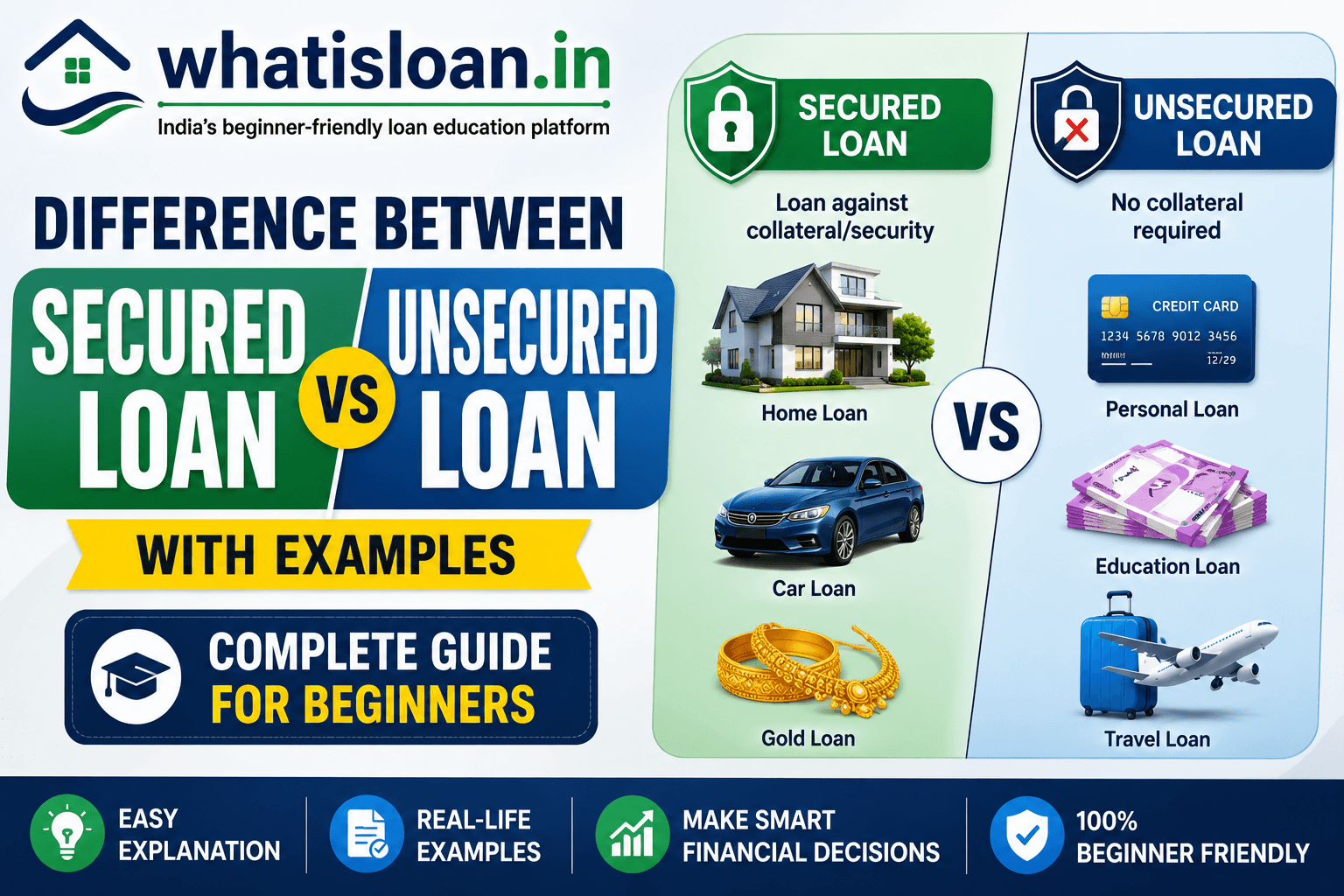
Secured vs Unsecured Business Loan
| Feature | Secured Business Loan | Unsecured Business Loan |
| Collateral | Required | Not Required |
| Interest Rate | Lower | Higher |
| Loan Amount | Higher | Lower |
| Approval Speed | Moderate | Faster |
| Risk | Asset at risk | No collateral risk |
Which Is Better?
If you can provide collateral, a secured loan may offer lower interest rates.
If you need quick funding and do not want to pledge assets, an unsecured business loan may be suitable.
Advantages of Business Loans
Helps Business Growth
Provides funds for expansion and development.
Improves Cash Flow
Supports daily operations during low-revenue periods.
Flexible Repayment
Many lenders offer multiple tenure options.
Preserves Working Capital
Allows businesses to keep cash reserves intact.
Disadvantages and Risks of Business Loans
EMI Burden
Monthly repayments affect cash flow.
Interest Costs
Borrowing always comes with financing costs.
Credit Score Impact
Missed payments can affect your credit profile.
Collateral Risk
Secured loans may put assets at risk.
Common Reasons Business Loan Applications Get Rejected
- Poor credit score
- Low turnover
- Incomplete documents
- Existing debt burden
- Insufficient business history
- Unstable cash flow
Tips Before Applying for a Business Loan
Check Your Credit Score
A strong credit score improves approval chances.
For beginners, read:
What Is CIBIL Score? Complete Beginner’s Guide
Compare Multiple Lenders
Do not apply immediately without comparing offers.
Calculate EMI Affordability
Ensure repayments fit your business cash flow.
Borrow Only What You Need
Avoid taking excessive debt.
Understand All Charges
Review processing fees, foreclosure charges, and penalties.
Business Loan vs Personal Loan
Many business owners compare business loans and personal loans.
A business loan is designed specifically for business expenses, while a personal loan can be used for almost any purpose.
Learn more:
What Is a Personal Loan and How Does It Work?
Key Takeaways
- A business loan helps businesses access funds for growth and operations.
- Multiple business loan types are available in India.
- Eligibility depends on credit score, turnover, and business history.
- Compare lenders carefully before applying.
- Responsible borrowing helps maintain financial stability.
Frequently Asked Questions (FAQ)
What is a business loan?
A business loan is money borrowed from a lender to finance business-related expenses.
Who can apply for a business loan?
Business owners, self-employed professionals, startups, MSMEs, and registered companies can apply.
Can startups get a business loan?
Yes. Many banks and NBFCs offer startup business loans.
What credit score is needed for a business loan?
Most lenders prefer a credit score of 700 or above.
Can I get a business loan without collateral?
Yes. Many lenders offer unsecured business loans.
What is the difference between a business loan and a personal loan?
A business loan is used for business purposes, while a personal loan can be used for personal expenses.
Are business loan interest payments tax deductible?
In many cases, business loan interest may qualify as a business expense. Consult a tax professional for guidance.
Conclusion
A business loan can be a valuable tool for entrepreneurs looking to start, manage, or expand a business. However, borrowing should always be done responsibly.
Before applying, compare lenders, understand all charges, evaluate repayment capacity, and choose a loan that matches your business goals.
The right business loan can help your business grow, improve cash flow, and create new opportunities for long-term success.
Disclaimer
Business loan terms, eligibility criteria, and interest rates vary by lender. Always verify the latest information directly with banks, NBFCs, and financial institutions before applying.
**Disclaimer:** The information provided on WhatIsLoan.in is for educational and informational purposes only. We do not provide financial, legal, tax, investment, or loan approval services. Loan eligibility, interest rates, terms, and policies may vary by lender and can change over time. Readers should verify information with banks, NBFCs, government authorities, or qualified financial advisors before making any financial decisions. WhatIsLoan.in is not responsible for any losses or decisions made based on the information published on this website.